
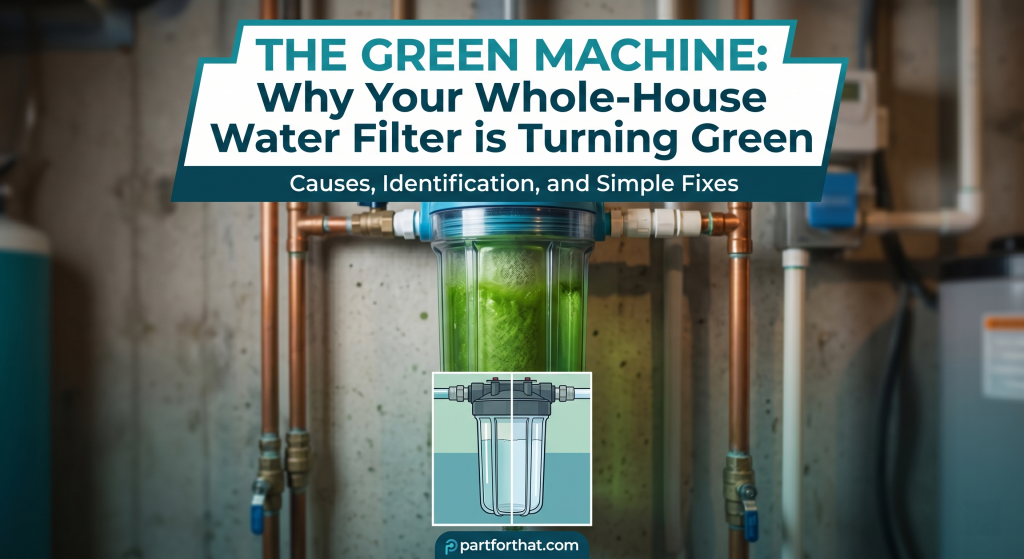
If you’ve peeked at your whole house water filter recently only to find a vibrant, swampy green hue staring back at you, you aren’t alone. While a water filter is supposed to represent cleanliness, seeing “green gunk” inside the housing can be alarming.
The culprit is almost always algae, and understanding why it grows is the first step toward getting your crystal-clear water back.
The Recipe for Algae Growth
Algae is a simple organism, but it’s incredibly efficient at colonizing new environments. For algae to thrive inside your water filter, it needs three specific ingredients:
- Sunlight (The Most Important Factor): Algae are photosynthetic. Most whole house filters use clear or translucent housings so you can monitor the sediment buildup. Unfortunately, this “window” also lets in the UV rays algae need to manufacture food. If your filter is near a window, in a bright garage, or installed outdoors, it’s essentially a greenhouse for algae.
- Nutrients and Moisture: Water is the obvious medium, but the “dirt” your filter catches (sediment, minerals, and organic matter) provides the perfect buffet of nutrients for algae to feed on.
- The Absence of Chlorine: This is the irony of high-quality water filtration. Many whole house systems are designed to remove chlorine—the very chemical that prevents biological growth. Once the chlorine is stripped away, the water becomes “living water” that is susceptible to blooms.
Is the Green Gunk Dangerous?
In most residential cases, the green algae found in filter housings is not immediately toxic to humans. However, it creates several secondary problems:
- Clogging: Algae can quickly slime over your filter media, causing a massive drop in water pressure.
- Odors and Taste: As algae dies and decomposes, it can release a “musty” or “earthy” smell and taste into your home’s water supply.
- Bacterial Breeding Ground: Algae colonies can provide a physical structure for more harmful bacteria to hide and grow.
How to Stop the Bloom
You don’t need to move your entire plumbing system to a dark basement to fix the problem. The most effective solution is to block the light.
1. Sanitize the System
If you already have growth, you must start fresh. Turn off your water, remove the filter housing, and scrub it thoroughly with a mild bleach solution or specialized housing cleaner. Replace the old filter cartridge with a new one, as you cannot “wash” algae out of the filter pores.
2. Eliminate the Light with PartForThat Covers
The most common mistake homeowners make is leaving their filter housings exposed. Many try DIY fixes like wrapping the filter in a trash bag or a towel, but these are unsightly, trap moisture against the housing (leading to external mold), and often fall off.
PartForThat.com offers custom-engineered filter covers specifically designed to solve this problem. These covers are built to:
- Provide 100% Light Blockage: By sliding an opaque, custom-fit cover over your clear housing, you instantly kill the algae’s energy source. No light means no photosynthesis, which means no more green.
- Maintain Easy Inspection: Unlike tape or permanent paint, these covers are designed to be easily lifted or removed so you can still check your filter’s condition in seconds.
- Professional Appearance: Instead of a makeshift wrap, these covers give your utility area a clean, engineered look that matches your equipment.
3. Regular Maintenance
Even with a cover, it is vital to change your filters on schedule. Over time, the organic matter trapped in the filter can still support microbial growth if left for too long.
Summary
Your water filter is doing its job by removing the chemicals that keep algae at bay. Don’t let its “transparency” be its downfall. By installing a dedicated cover from PartForThat.com, you protect your water quality, extend the life of your filters, and keep your system looking and performing at its best.